The New York Times Email Mistake: Can It Happen To You?

By now you probably know about the New York Times’ little email error on Wednesday, December 27. But if you don’t, here’s the nutshell: The Times sent a ‘Cancellation’ email to 8.6 million people, presumably every single one of their online email subscribers. The email was meant only for those who actually subscribe to the paper’s home delivery service.

First the Times claimed it was spam, then blamed their email service provider Epsilon, and finally fessed up; The Times did it themselves.

Subscribers Want To Hear From You RIGHT NOW

When I subscribe to an organization’s email or mobile marketing communication it is at that very moment I am looking to engage in a meaningful relationship with that company. As soon as I type in my information and hit submit I immediately check my Blackberry or Gmail account to ensure my subscription went through and see what valuable piece of information that company has to share with me; whether it be an exclusive discount, an insightful whitepaper, or a simple message asking if I was sure I wanted to opt-in.

It is quite disappointing when I don’t see a message within minutes or even hours of
subscribing with at least a thank you for sharing what I consider to be my valuable personal information. My interest in whatever product I was curious about has quickly faded and usually I am on to the next organization that can provide me with comparable products or services. Although I like to think I am unique, I have to believe a lot of people have similar reactions when their subscription to a service goes unrecognized for an extended period of time.

Innovation Surrounds Mass TLC’s unConference

This past Friday I attended the Massachusetts Technology Leadership Council’s Annual unConference at the Hynes Convention Center in Boston. This conference has been one of the best annual events put on by the MassTLC, and has grown tremendously just in the last couple of years. Have you ever been to an “unConference”?

The minute I walked into the large meeting room where  introductory speeches were given, I immediately felt the presence of 500+ innovative  New England business leaders. Nearly everyone there carried an air of  confidence, energy, enthusiasm, and appeared to listen very carefully to what  the speaker had to say in his opening remarks. I quickly assessed that this unConference was going to be like no other conference I had been to before. And I was right!

7 Email Marketing Trends You Cannot Ignore

7 Email Marketing Trends You Cannot IgnoreAre your campaigns reaching the intended audiences?

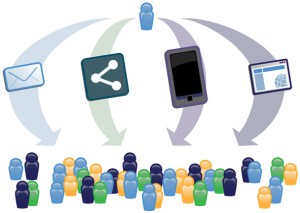
To maximize the power of email — as well as emerging channels such as social and mobile — you have to think about how these channels fit into your overall marketing strategy and objectives. What channels are best suited to build your brand, help deepen customer relationships, or reach your target market?

Email marketing is an essential part of any successful marketing mix. Large enterprises, as well as small-to-medium sized businesses, use email marketing to engage their target audience by providing compelling and relevant content. The latest email marketing technology allows you to deepen customer relationships, turn leads into sales opportunities, and move them forward in the buying process.

The Center Of Attention: Email as a Primary Source of Content

What is The Future of Email Marketing?
By now you’ve heard the question: Is email a thing of the past? Social media is a major phenomenon in marketing, and the speculation abounds about how it will impact current online marketing methods.

Let’s answer this with a few questions of our own:

  • Has email made landing pages a thing of the past?
  • Have landing pages made websites a thing of the past?
  • Have websites made telephones a thing of the past?
  • Have telephones made storefronts a thing of the past?

You see where I’m going with this. We’ve all forecasted the decline of postcards, television ads, billboards, and every other type of advertising and marketing method based on what was new. Yet we still receive mail, drive past billboards, get phone calls, and dodge television ads every day. And every time, the new methods turned out to have drawbacks of their own that create new problems and opportunities.

Do Your Images Detract From Your Message?

When designing email newsletters and marketing campaigns, it is important that you consider the limitations presented by email readers. Many users, either by personal preference or email client defaults, are blocking images from being downloaded in the HTML-formatted messages they receive. Thus, it is a good practice for email designers to prepare for both image “off” and “on” scenarios.

Here are some of the basics you need to know about using images in email:

Google+ Changes Your World

As usual, the Internet is hopping with activity as everyone’s talking about Google’s latest offering. The last couple of times it’s been talk of Google Buzz, the Big G’s answer to Twitter and their foray into the world of status updates and microblogging, and Google Wave, the Internet search giant’s attempt at redefining the electronic communication paradigm and their approach to collaborative editing. This time, though? The talk is about Google+.

If you look around the web, you’ll see that the vast majority of the talk regarding Google’s new hotness addresses concerns and questions as they would relate to the business world. How can marketing agencies leverage the userbase of Google+ in order to effectively reach their target audience? How will Google+ affect those companies who have invested so much in their Facebook presence? How will Google+ affect a company’s overall SEO strategy, if at all?

While those are all good questions, those questions pretty much only mean a whole lot to you if you’re a business. Now, I don’t know about you, but I’m not a business. I’m a person. In fact, I’m an end-user. But more to the point, I’m a designer.  If anything, this means that I look at things the way other people would (or should). So how about an evaluation of this new app from a person’s perspective?